Atrium — shared contracts and the typesetting engine
Atrium
A private library and reading room for one household: your own books, music and video on your own server, read and played in the browser, with notebooks and LaTeX documents in the same place.
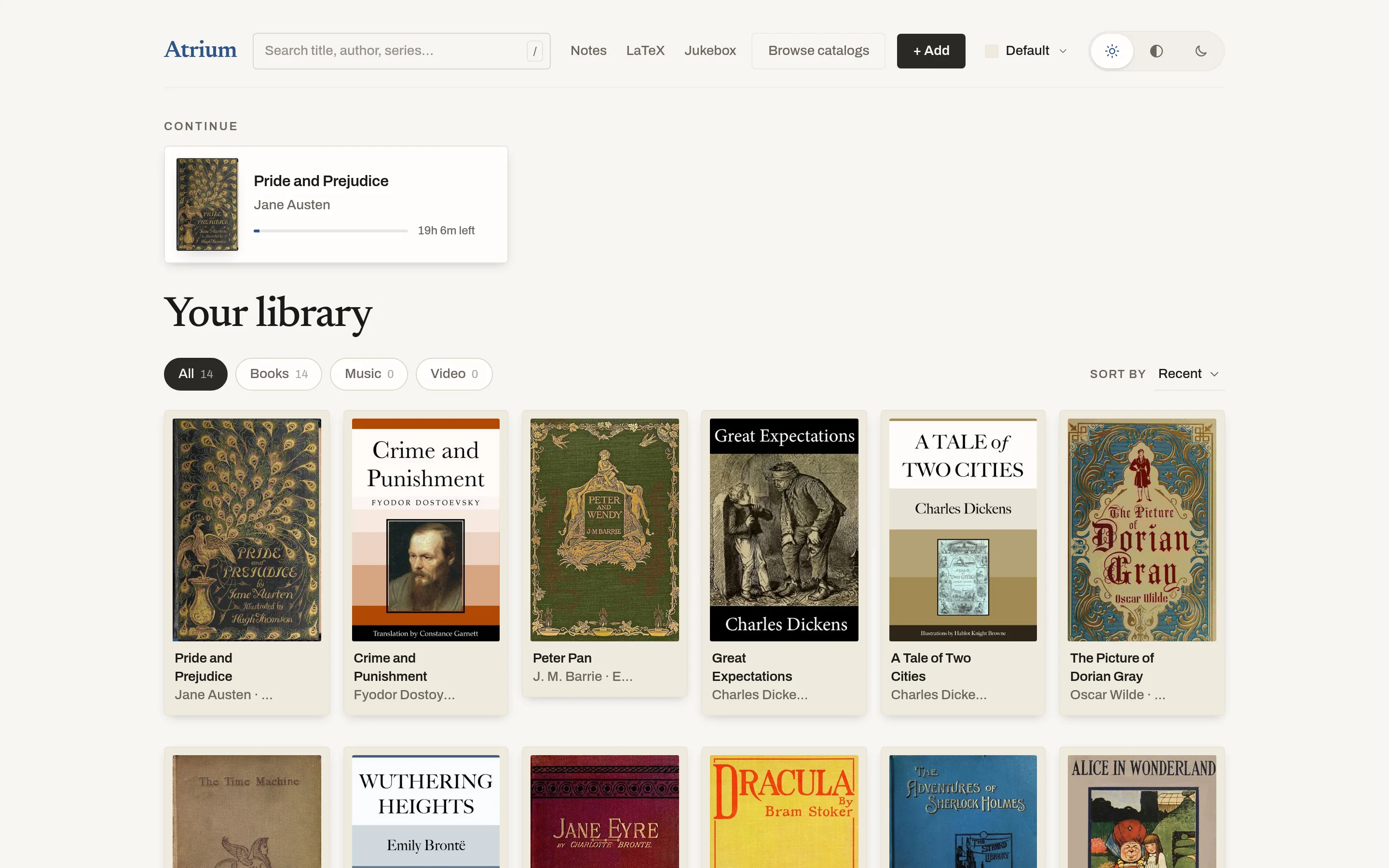
Status: Personal project, built and used by its owner. Deployed on the production site at /atrium/, behind the estate's sign-in, with no public sign-up. The newest part, the Jukebox (a remote for a Discord music bot), is built but waits on a deploy.
What it does
- Keeps books (EPUB, PDF), music (MP3) and video (MP4, WebM) in one library on your server. Covers come out of the files, and free classics can be imported from Project Gutenberg.
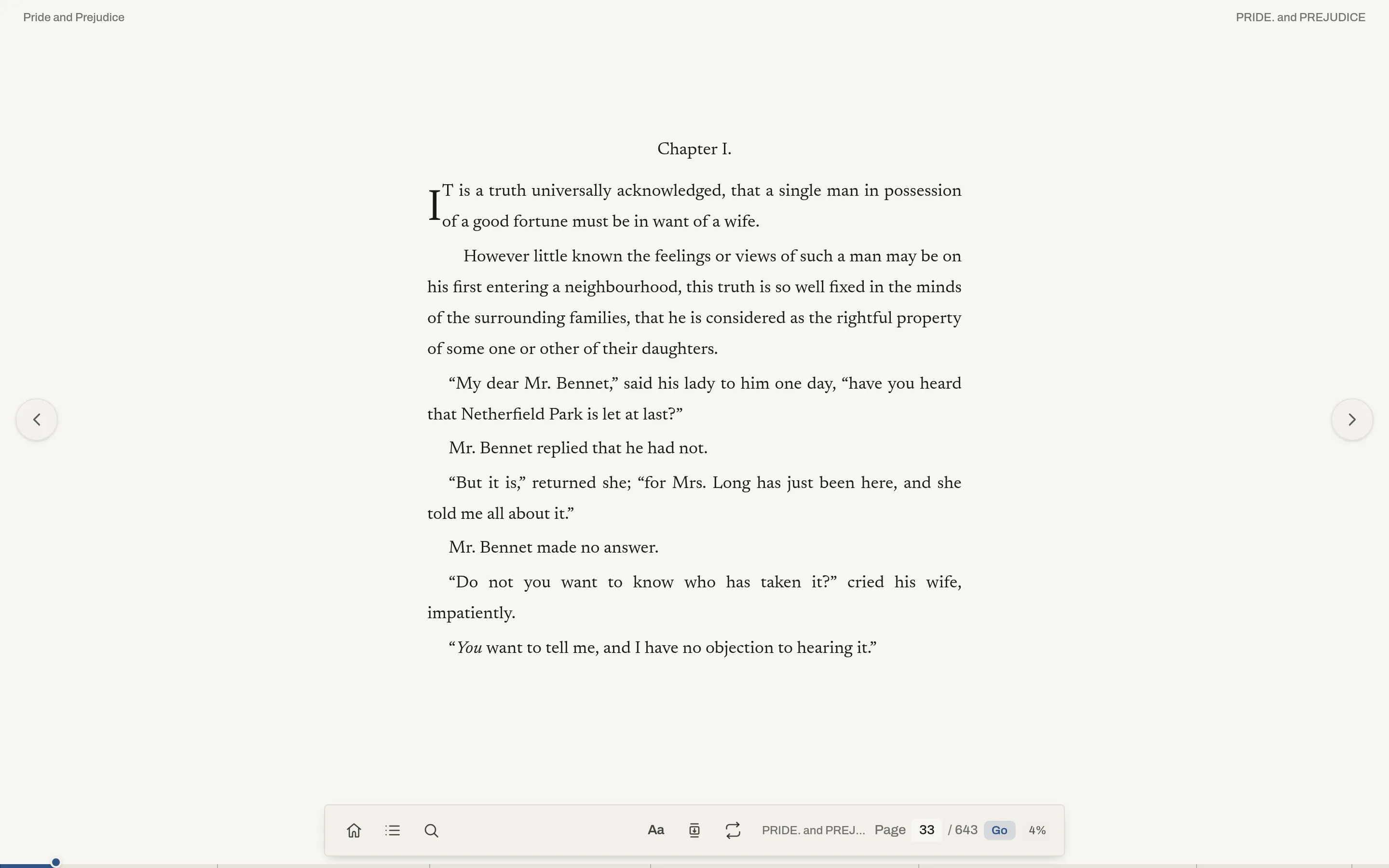
- Opens EPUB and PDF in the browser, with page turns, contents, search, three themes, two typefaces, and adjustable size, spacing and margins.
- Gives each person in the household a profile with their own reading position and settings. Switching profiles takes one tap and no password.
- Installs as an app and keeps downloaded books readable offline.
- Converts a book between EPUB and PDF with Calibre and keeps both copies linked.
- Looks up a wrong or missing title and cover on request: songs in MusicBrainz and the Cover Art Archive, books in Open Library. Nothing is looked up on upload.
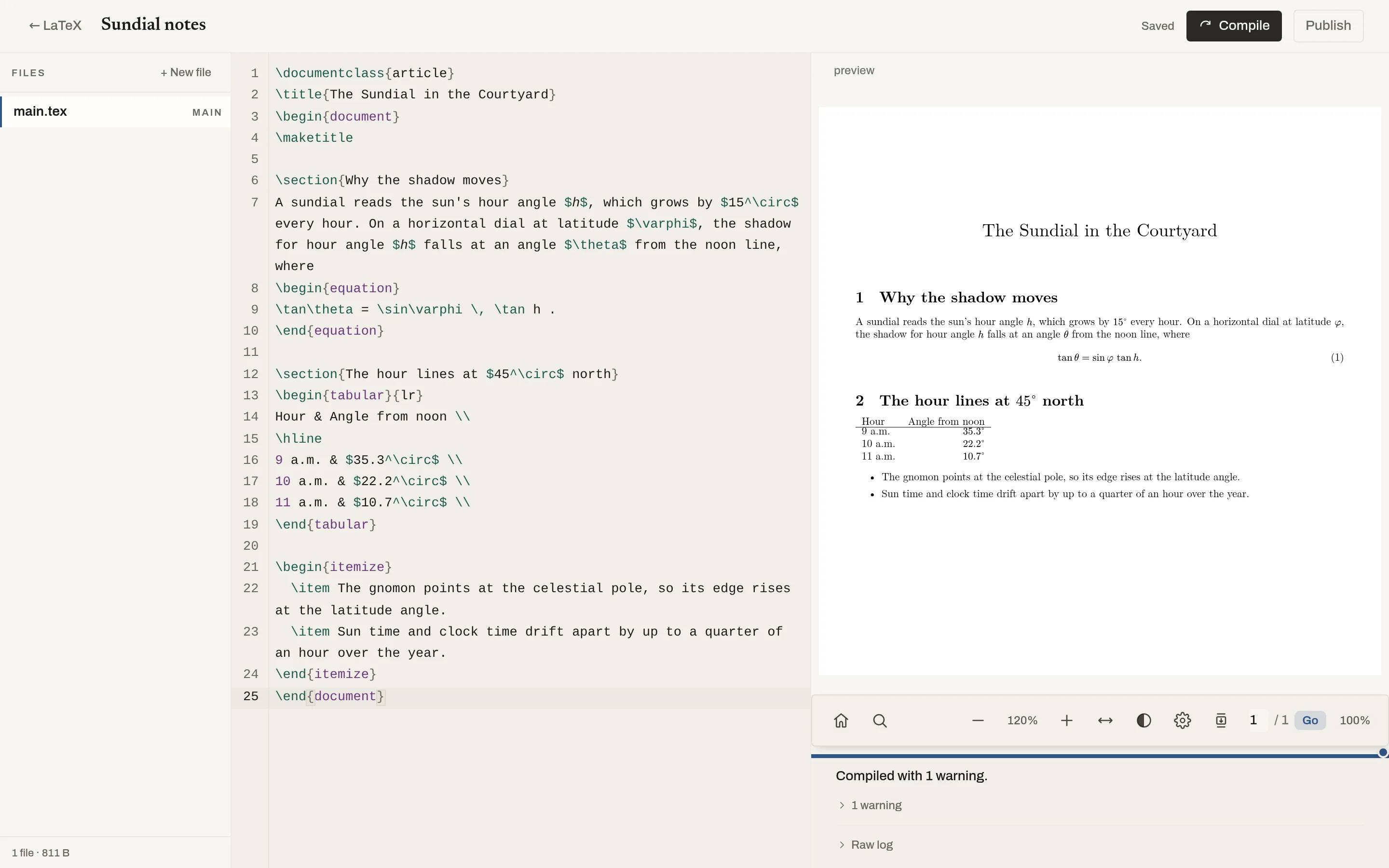
- Holds paged notebooks (pen strokes and text boxes) and LaTeX projects. LaTeX compiles with Atrium's own TypeScript engine, so no TeX install is needed, and a compiled document can be published into the library.
It is deliberately smaller than a media server such as Jellyfin. It takes files by upload rather than watching a folder, reads metadata from the files and looks it up online only when you ask, one item at a time, plays only the formats a browser plays without transcoding, and keeps its own accounts, with "Sign in with Ward" as an optional second way in.
Screenshots
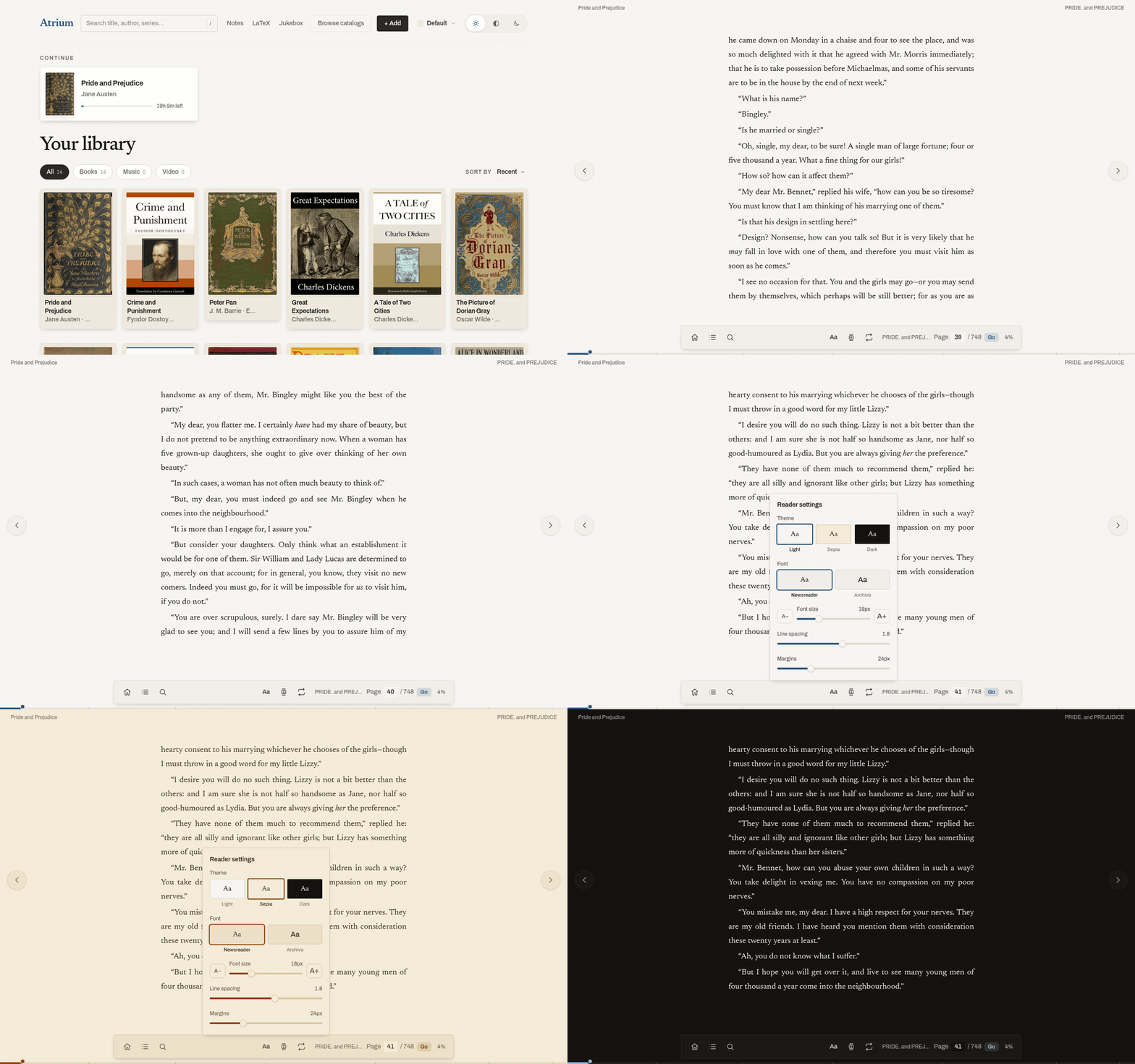
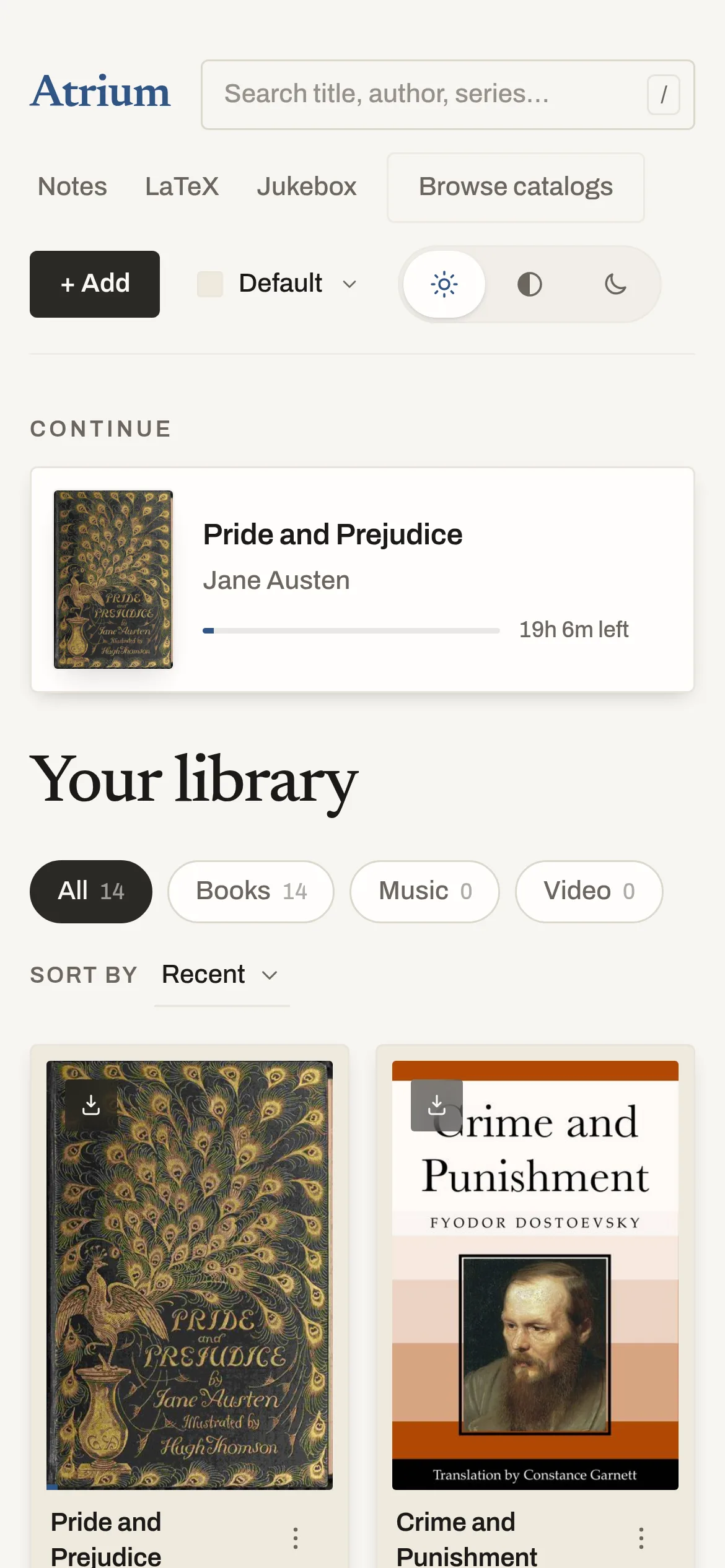
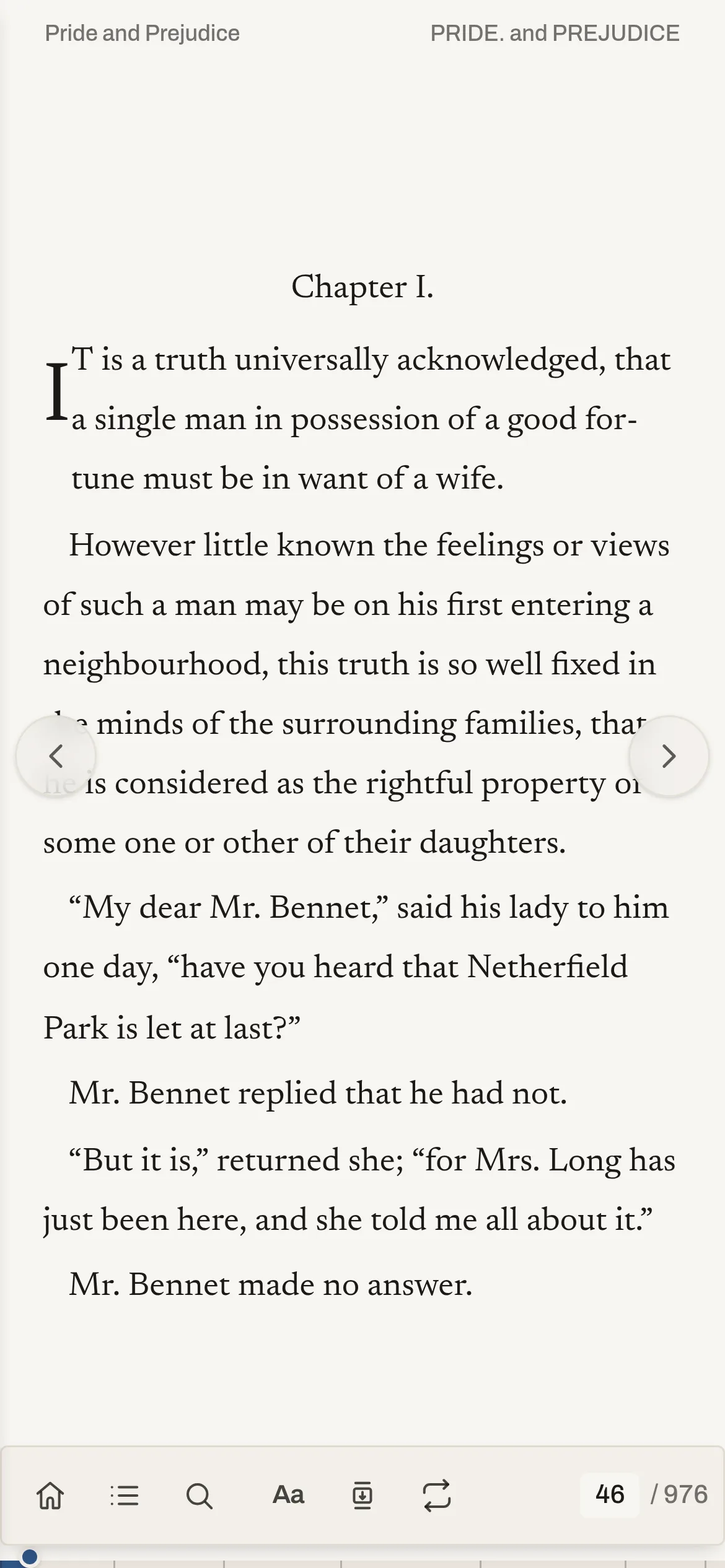
In the clip, Pride and Prejudice opens from the Continue card, three pages turn, and the reader settings (the "Aa" button) switch the theme from Light to Sepia to Dark.
| The reader, with its bar showing | LaTeX: source, compiled preview and log |
|---|---|
 |
 |
| Library on a phone | Reader on a phone |
|---|---|
 |
 |
How it works
apps/web is a React and Vite app, and the browser renders the books itself (epub.js for EPUB, PDF.js for PDF). apps/api is a Fastify server that stores files and covers on disk, keeps rows and per-profile progress in SQLite, runs Calibre conversions, and compiles LaTeX with packages/typeset on a worker thread. packages/shared holds the Zod contracts both apps import. Every API request carries atrium's own session cookie, and a guard checks it on every route except /health. Accounts are atrium's own, and "Sign in with Ward" is a second way in. More in docs/architecture.md.
Run it locally
Requires Node 24 or later. Calibre is optional; without it only Convert fails. Atrium runs on its own accounts with no other service. "Sign in with Ward" is optional: it needs a local Ward, the container in the sibling repo's wzd_auth/infrastructure/local, whose seed.mjs writes atrium's WARD_OIDC_* settings into .env.
npm install
cp .env.example .env # runs on local accounts as it is; Ward's seed.mjs adds the WARD_OIDC_* values
npm run dev # web on :5173, API on :3001
Then open http://localhost:5173/atrium/ and sign in with a local account (npm run seed:user -w @ebook-reader/api makes one) or with "Sign in with Ward". Starting Ward, using a scratch library, env vars and tests: docs/getting-started.md.
Project layout
| Path | What lives there |
|---|---|
apps/web |
The client: library, reader, notes, LaTeX editor, Jukebox |
apps/api |
The API: library storage, profiles and progress, Convert, LaTeX compiles, Jukebox |
apps/docs |
The Docusaurus docs site, built from corpus/ and the TypeScript |
packages/shared |
Zod schemas and types shared by web and API |
packages/typeset |
The LaTeX-subset typesetting engine |
infrastructure |
Dockerfile and compose file for the API container |
corpus |
Project wiki and the briefs that built it |
Docs
- docs/: setup, architecture and the images used here
- Docs site: served at
/atrium/docs/(source inapps/docs) - Project wiki: corpus/, with the decisions, glossary, status and briefs
License
No license yet; all rights reserved.